
From Concept to Measurement — Social AR Production Process
Social augmented reality used to be a novelty. A dog-ear filter. A face swap. Cute, forgettable.
Not anymore. Brands now invest billions in AR campaigns across Snapchat, TikTok, and YouTube, because AR does something almost nothing else in digital marketing does: it gets people to choose to engage with your brand — and then share it.
But here's what most brands get wrong. They think AR success is about technical skill. It's not. It's about process. A great lens is the result of a production workflow that connects strategy to creative to deployment to measurement, with each phase feeding the next.
I know because I've run that workflow hundreds of times. I've built more than 200 variations of my Potato lens, and together they've generated billions of impressions on Snapchat. That number didn't come from one lucky viral hit. It came from a repeatable system: understanding audience psychology, understanding platform mechanics, and iterating relentlessly on what the data said was working. In this guide, I'll walk you through the same production process I use for client work, phase by phase.
Whether you're a brand marketer, an agency, a broadcaster, or a streamer, this is the roadmap.
What Social AR Production Is (and Why It Matters)
Social AR production is the full workflow of designing, building, launching, and measuring augmented reality experiences on social platforms. It blends storytelling, 3D design, real-time development, and platform expertise. It lives at the intersection of creative vision and technical execution.
And it works. Research on augmented reality marketing shows AR experiences drive significantly higher engagement than static content. Users spend more time with AR lenses and filters, share them more often, and remember the brand better afterward. For brands, that means stronger brand lift, better conversion rates, and cheaper customer acquisition.
Today's social AR covers a lot of ground: interactive lenses and AR filters for social discovery, custom avatars and VTubers for streaming, real-time broadcast AR for live events, and experiential activations that bridge digital and physical. Each format has its own quirks, but they all follow the same six-phase workflow: concept, creative development, technical build, platform optimization, deployment, and measurement.
Let's walk through it.
Phase 1: Strategy and Concept
Every AR campaign that works starts here. Every one that flops usually skipped this part.
Define the objective first. Awareness? Product consideration? Sales? User-generated content? Your objective shapes everything downstream. An awareness play prioritizes viral reach. A conversion play prioritizes product interaction and a clear call to action. You can't optimize for everything, so pick.
Know your audience — really know them. What platforms do they live on? What do they actually engage with? Here's the truth most brands don't want to hear: nobody wants to use your ad. The AR experiences that go viral are the ones people genuinely want to use because they're fun, expressive, useful, or weird in exactly the right way. The Potato worked because it made people laugh, not because it delivered a brand message.
Pick the right platform and format. Snapchat's audience skews younger and is deeply fluent in AR. TikTok offers massive reach and algorithmic amplification. YouTube's new Effect Maker opens the door to the Shorts audience. The same concept can crush on one platform and die on another, so match the format to the goal before you build anything.
Make the concept simple, memorable, and platform-native. The best AR doesn't feel like an ad. It feels like a feature. Before you build anything, ask: will this stop the scroll? Will someone tag a friend? Would you share it?
Set your KPIs before production starts. Impressions? Engagement rate? Shares? Time spent? Conversions? Deciding this now means your team builds with measurement in mind instead of bolting it on later.
Phase 2: Creative Development and Design
Now the concept becomes something you can see and touch.
Start with mood boards and visual direction. Playful or serious? Minimal or maximal? Realistic or stylized? This should match both your brand and your audience's taste, and it guides every design decision that follows.
Storyboard the interaction. What happens when the user taps? Raises their eyebrows? Opens their mouth? Moves the phone? Storyboarding forces you to think through the experience before you pay for full production, and it gives your dev team a clear blueprint.
Build the 3D assets. Models, textures, animations, particle effects, UI. This is where craft shows. A great concept with muddy textures and stiff animation will still feel cheap. Tools like Blender, Maya, Cinema 4D, and Substance Designer do the heavy lifting here — or a specialized AR studio does it for you.
Design inside the platform's limits. Every platform has performance budgets and file size caps. Snapchat Lens Studio has specific performance requirements. TikTok Effect House has its own. Your creative team has to design within those walls without the final product feeling constrained.
Prototype and test with real users before full build. Does the interaction feel intuitive? Does it feel like a feature, or like an ad wearing a feature costume? Testing now is cheap. Rebuilding later is not.
Phase 3: Technical Development
This is where the vision becomes a working, deployable AR experience.
Use the right tool for the platform. Snapchat lenses are built in Lens Studio. TikTok effects are built in Effect House. YouTube's Effect Maker (at effects.youtube.com) handles Shorts effects. And for advanced experiences beyond social platforms, developers reach for Google ARCore or Apple ARKit to build native apps. (You may still see older guides recommending Meta Spark for Instagram filters — don't bother. Meta shut the platform down.)
Implement and optimize your 3D assets. Import the models, set up materials and textures, configure animations — and optimize hard. If your lens drops frames or crashes, users are gone in two seconds and they're not coming back.
Build the interactive logic. Face tracking triggering animations. Tap detection firing responses. Particle systems, physics, whatever your concept calls for. This is what makes the experience feel alive instead of like a sticker.
Bake in analytics from the start. In-effect tracking tells you which features people use, how long they stay, and exactly where they drop off. That data is gold when it's time to optimize — but only if you build it in before launch, not after.
Test on everything. Old phones, new phones, iOS, Android, bad wifi. Your lens has to run smoothly on a four-year-old device on a spotty connection, because that's where a huge chunk of your audience lives.
Complex projects may also need custom backend work — real-time multiplayer, dynamic personalization, external data feeds. That's a different tier of build, but the same principle applies: architecture determines whether the experience scales.
Phase 4: Platform Optimization and Pre-Launch
Your lens is built. Don't launch yet.
Optimize for how the platform surfaces AR. On Snapchat, lenses get discovered through search, featuring, and promotion. On TikTok, effects surface through the effects library and trending content. Design for discoverability from the start — keywords, categories, and a concept that photographs well in a preview tile.
Make the preview count. Your preview image, description, and promo video are the storefront. A compelling preview can be the difference between a lens with thousands of uses and one with millions. I mean that literally — I've seen it swing that far.
Tag and categorize properly. Use keywords that describe what your lens does and who it's for. Ride trending topics and hashtags where they genuinely fit.
Run a pre-launch checklist. Technical validation across devices. Brand compliance. Platform policy compliance. Every KPI tracking tag in place. Boring? Yes. But every expensive launch-day fire I've ever seen started as a skipped checklist item.
Plan the launch itself. Big promotional push or organic growth? Influencer partners? Paid amplification? Match the launch plan to your objective and budget.
Phase 5: Deployment and Real-Time Optimization
Launch day isn't the finish line. It's the starting gun.
Submit and deploy. Platforms review lenses and effects for policy and technical compliance, usually within 24–48 hours. Build that into your timeline — especially for date-sensitive campaigns.
Watch the metrics closely in the first hours. If performance is way below expectations, find out why fast. Technical issue? Creative not landing? Algorithm not surfacing it? Each has a different fix.
Fix problems immediately. Most platforms let you push updates without a full re-review, so if users hit crashes or glitches, you can patch quickly. Speed matters here — early momentum is hard to rebuild.
Optimize on live data. If one interaction is driving engagement, lean into it. If users drop off at a specific moment, dig into that moment. If the preview isn't converting, test a new one. This is exactly how the Potato became 200 variations instead of one lens — each version taught me something the next version used.
Amplify what's working. If organic performance is strong, that's your signal to add fuel — paid promotion or influencer partners with engaged audiences can multiply reach at exactly the right moment.
Phase 6: Measurement and Analysis
This is where AR connects to actual business outcomes — and where you earn the budget for the next campaign.
Collect data across every touchpoint. Platform metrics (impressions, engagement, shares). In-effect analytics (feature usage, drop-offs, session time). Downstream conversions (site visits, app downloads, purchases). The fuller the picture, the better your decisions.
Study the engagement patterns. Which audience segments engaged most? What time of day? Did people share it? Come back to it? These patterns tell you what resonated and shape your next creative.
Connect AR engagement to business results. Did lens users visit your site? Buy something? Cross-platform tracking is harder than it used to be thanks to privacy rules, but UTM parameters, tracking pixels, and first-party data can bridge the gap. This is the ROI conversation, and you want receipts.
Benchmark everything. Against similar AR campaigns, against your past work, against your non-AR marketing. Numbers without context are just numbers.
Write down what you learned. What worked, what didn't, what surprised you. Over time this becomes a playbook — and that playbook is why campaign five outperforms campaign one. It's also why my 200th Potato variation performed nothing like my first: every launch fed the next one.
[Author bio slot — e.g., "Phillip Walton is the creator of the Potato and founder of Augury, an AR studio that has produced lenses and filters for Taco Bell, Nickelodeon, Paramount, and Amazon Studios. His AR effects have generated billions of impressions worldwide."]
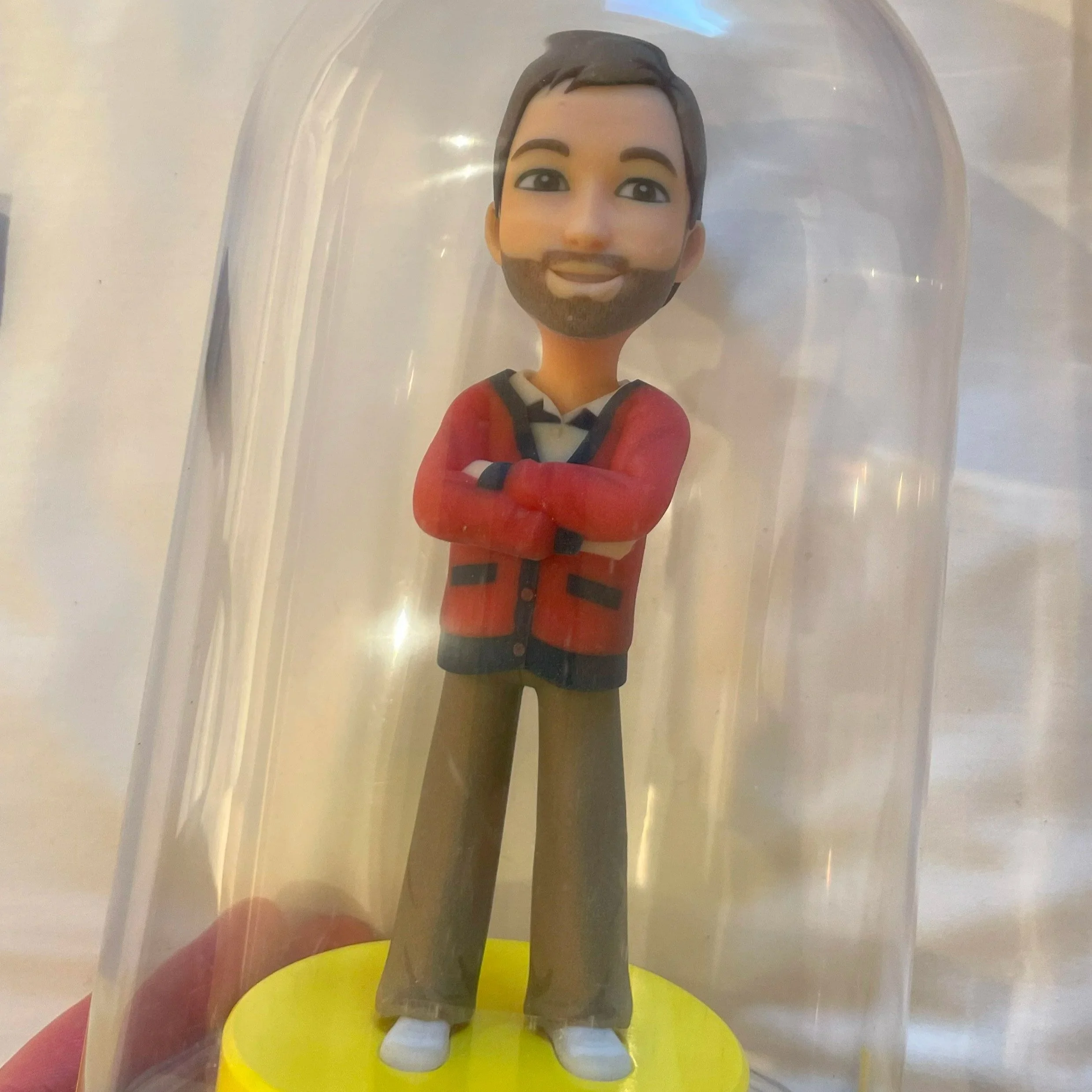
Phil Walton
Phillip Walton is the founder of Augury, an AR studio that has produced lenses and filters for Taco Bell, Nickelodeon, Paramount, and Amazon Studios.
